

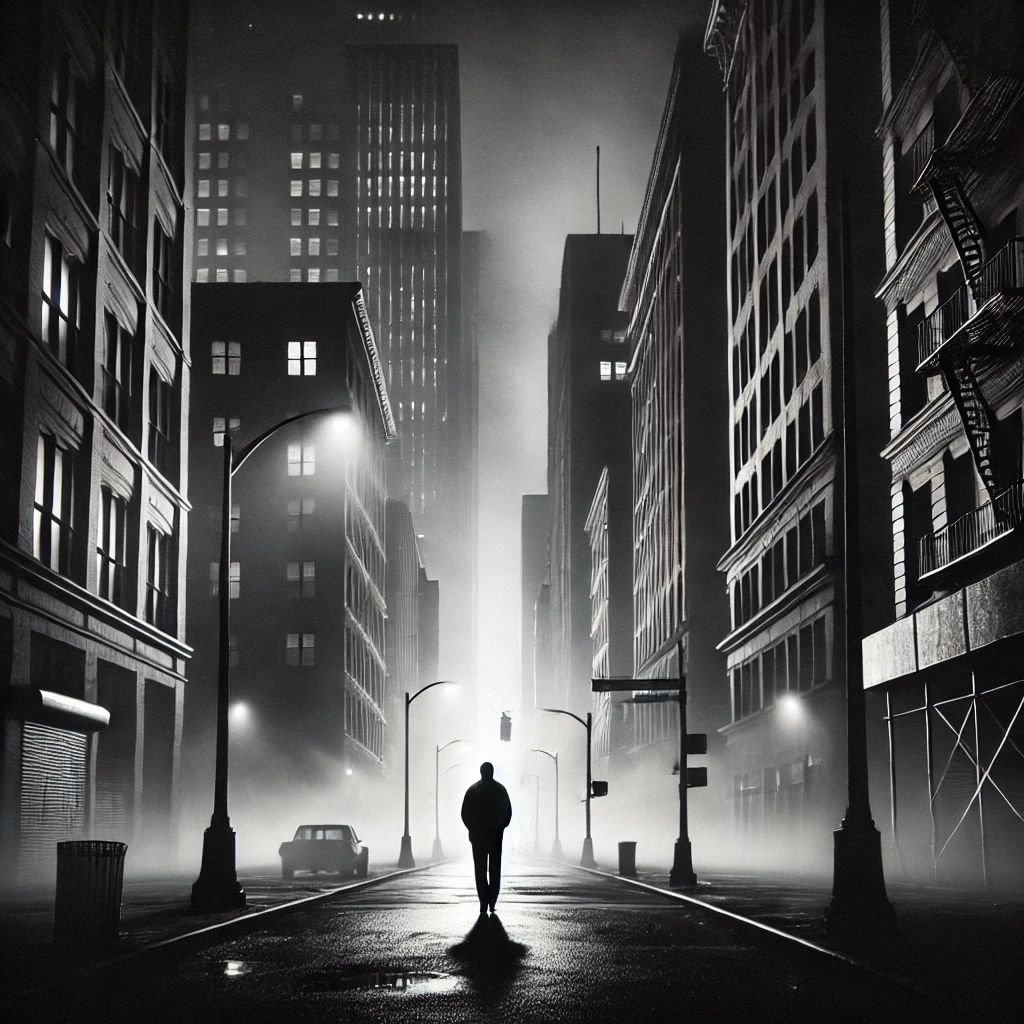
There’s something almost liturgical about the opening of Gangsta’s Paradise. The choral swell, solemn and grand, stirs something ancestral—a ghost of a hymn echoing across asphalt and heat haze. It’s a song that doesn’t begin so much as descend, like dusk over a cityscape, or a psalm cracked open on a prison bed.
Coolio’s 1995 hit, produced by Doug Rasheed, doesn’t come out of nowhere. It walks in the footsteps of Stevie Wonder’s Pastime Paradise, from the magnum opus Songs in the Key of Life. Wonder’s original was already a lament—cautionary, orchestral, leaning heavily on synthesizers and choral backing to evoke a world spinning too fast on the axis of illusion. It was a song about looking backward with regret, and forward with apprehension, and Coolio’s version simply pulls that apprehension into sharper focus. Where Wonder sang about wasted dreams, Coolio steps inside them.
The reworking is bold. It retains the orchestral grandeur, the brooding synths and sweeping choir, but frames them with a darker edge. It’s not nostalgia anymore—it’s survival. The track hits like a warning shot. The beat is steady but severe, almost military in its cadence, as if marching through the streets of a city that no longer pretends to be a promised land.
And yet, there’s a kind of sacredness in it. The lyrics quote Psalm 23 directly—“As I walk through the valley of the shadow of death…”—a line worn thin by repetition elsewhere, but here it regains its chill. This is not metaphorical darkness; it’s the lived kind. The shadow isn’t a concept—it’s the threat around every corner, the weariness in the eyes of a young man who’s grown old too fast.
What makes Gangsta’s Paradise so striking is how clearly it refuses to glamorize the world it describes. It’s not a song about conquest—it’s a song about consequence. “Tell me why are we so blind to see / That the ones we hurt are you and me?” There’s an ache at the center, a prayer caught in the throat. The “gangsta” here isn’t a hero or an anti-hero, but a man trapped in a labyrinth of circumstance. Coolio narrates not with pride but with resignation. The paradise is bitter, fragile, and already slipping away.
It’s said Stevie Wonder initially resisted letting his song be used in what he feared would be a glorification of violence. And in truth, Gangsta’s Paradise could have gone that way. But Wonder only agreed after ensuring that the lyrics contained no profanity, no easy provocations. The result? A song that slices deeper for its restraint. Without vulgarity to hide behind, the story stands bare: raw, aching, unadorned.
When Gangsta’s Paradise became the biggest-selling single of 1995 in America, it wasn’t just because of its hook. It was because it captured something unspoken—a grief dressed in armor, a truth too often ignored. In doing so, Coolio and Doug Rasheed nudged hip-hop toward a different kind of storytelling, one not just of bravado, but of bruised introspection. They helped expand what rap could hold—not just rage, but reverence.
And so the song endures, not just as a cultural artifact, but as a strange and holy thing. It’s a psalm rewritten in streetlight and sweat. A requiem for a paradise never found. A reminder that sometimes, even in the hardest places, there’s still room to wonder aloud—what have we become?
And maybe, beneath the beat, a softer question still: what might we yet be, if we dared to walk a different path?